EHOSS in Export.sk: export starts at the first design of a product
Export.sk interviews founder and CEO Viktor Kvachan on building products that travel — why everything stays under one roof, when a one-off solution becomes a platform, what nine factories in China brought home for LASERCUT, and why exporting a machine is hardest after the sale.
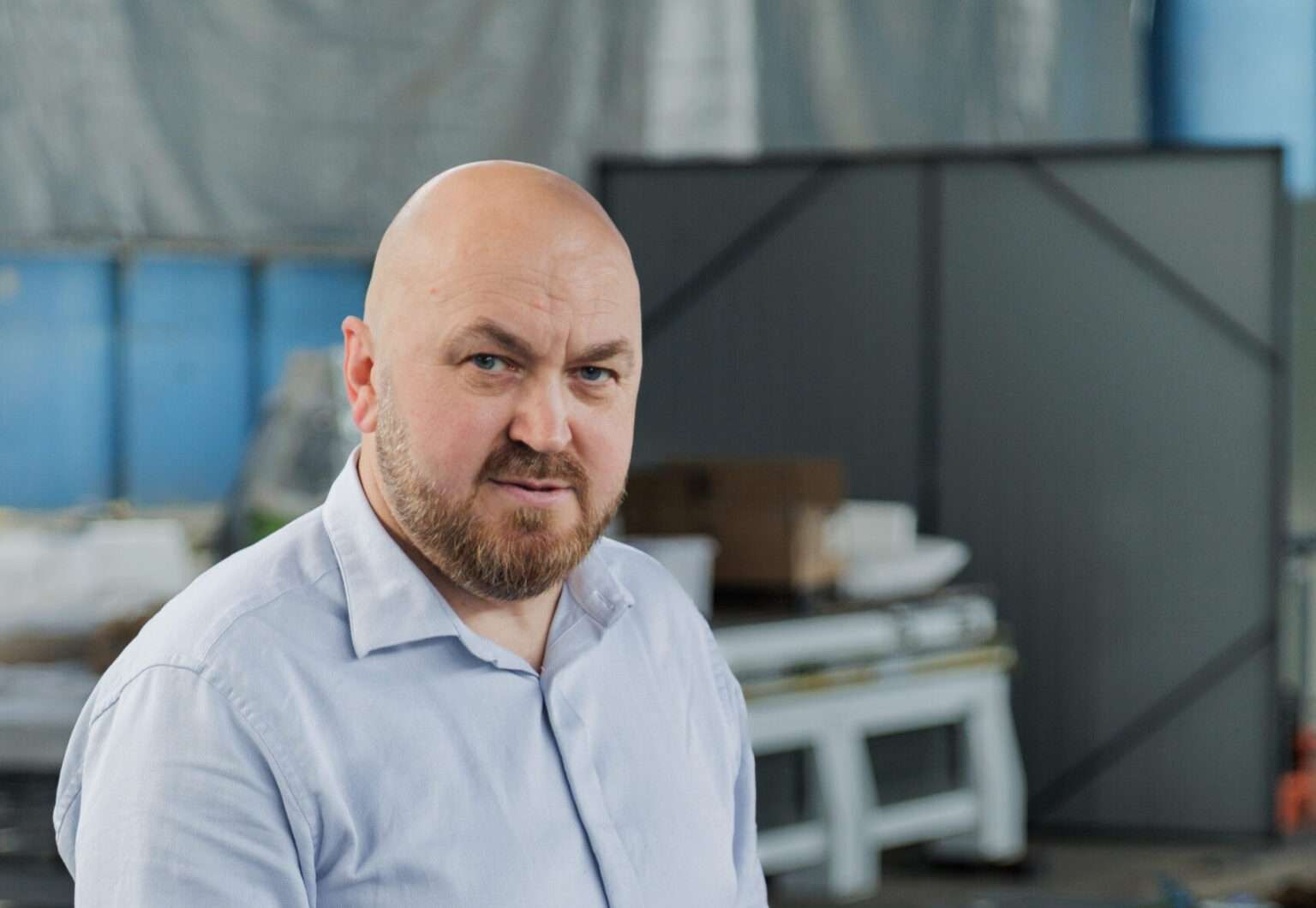
Export.sk, the Slovak portal on international trade, interviewed Viktor Kvachan, founder and CEO of EHOSS and a member of Rada slovenských exportérov, the Council of Slovak Exporters, for its Our Exporters section. The interview, by Filip Šandor, is translated here in full.
EHOSS brings its own development, automation, software and manufacturing together under one roof. What advantage does that model give you in developing your own technology and preparing it for foreign markets?
The biggest advantage is speed, control and the ability to respond to what the market really needs. When development, design, automation, software and manufacturing are split between several outside suppliers, every change means a new round of communication, new deadlines and often compromises as well. We try to keep as much of that process in-house as we can. In practice it means that the designer, the automation engineer, the software team and production work on one product at the same time. If testing shows that something needs to change, we can move the change quickly from development straight into production and then test it again.
For a foreign market that matters even more. It is not enough just to develop a product. It has to be standardised, documented, serviceable and ready for repeat production. That is exactly why we see our own engineering and manufacturing capacity as one of EHOSS’s main competitive advantages.
Your solutions grow out of specific problems in real operations. What decides whether an individual technical solution can become a standardised, scalable product for a wider market?
What decides it is whether the problem exists repeatedly across a large enough group of customers. Every individual project can produce an interesting technical solution, but not every solution has the potential to become a product. In development we therefore follow three main questions: whether the problem recurs on several markets, whether we can solve it in a standardised way, and whether the product can be manufactured, installed and serviced without starting from scratch with every customer. If those conditions hold, individual know-how can gradually turn into a platform.
That is also how our product architecture comes about. Today EHOSS develops two main technology lines — LASERCUT, a digital manufacturing platform, and HORSESTABLE, an ecosystem for the modern horse stable. Our goal is not to make as many unique machines as possible. The goal is to create technology that can be configured for a particular customer but can also be built repeatedly and scaled on international markets.
One of EHOSS’s main areas is technology infrastructure for modern horse stables. What potential do you see for automating this segment in Europe, and what decides today whether customers are willing to invest in new technology?
Horse stables are among the areas where many everyday processes still depend on manual work. Preparing forage, handling bedding, feeding, cleaning, caring for the horses and processing waste are tasks that repeat every day and take time, people and a consistent standard of work. That is exactly where we see a great deal of room for automation. So we do not see HORSESTABLE as a single machine but as an ecosystem of several technology platforms — FORAGE.PRO, BEDDING.PRO, FEEDING.PRO, CLEANING.PRO, MUSCLE.PRO and REUSING.PRO. Each of them handles a different part of the operation, but the shared aim is to reduce routine tasks, increase control over the processes and make the whole stable more efficient.
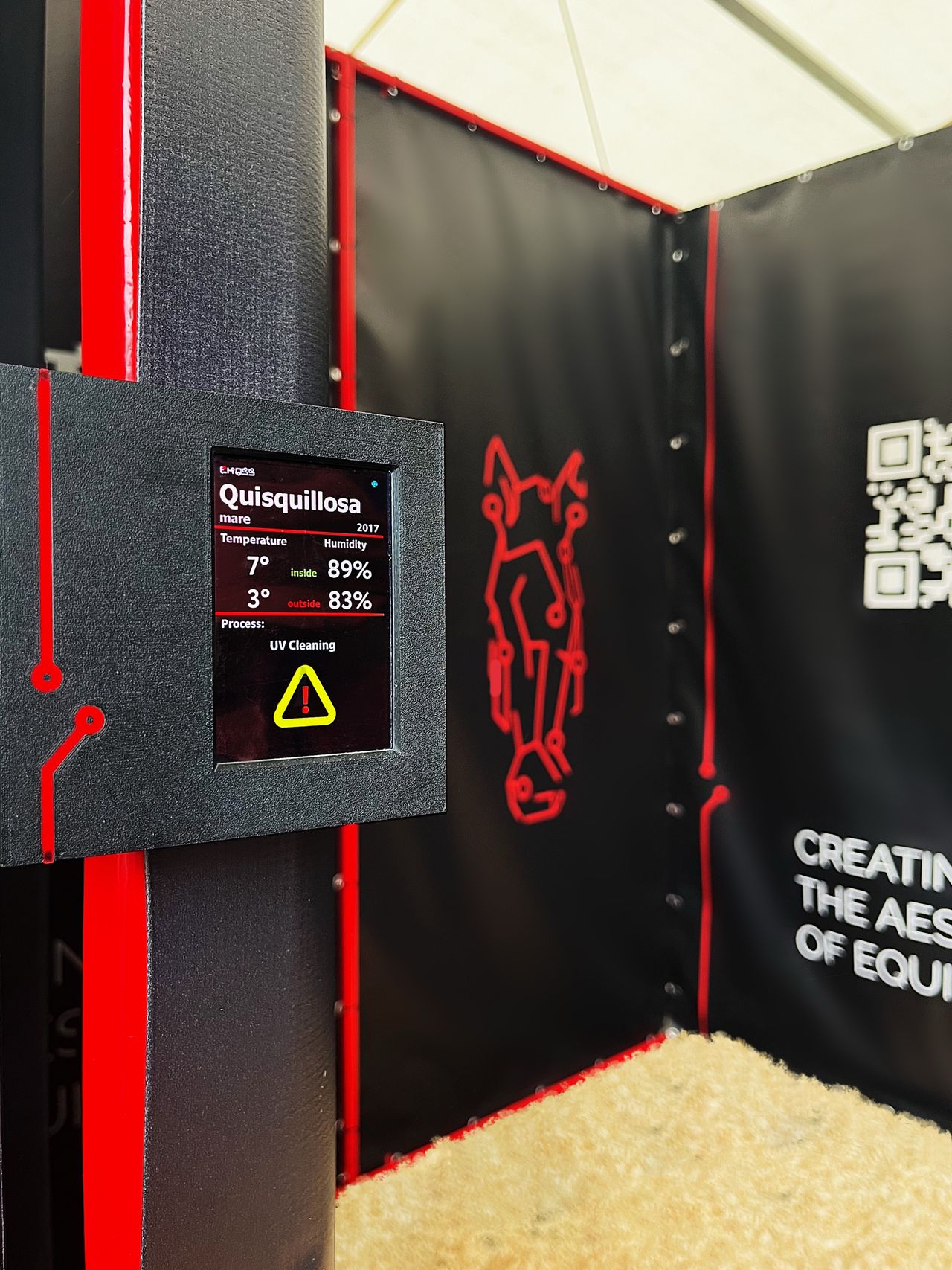
Willingness to invest, however, is not decided by the technology itself. The customer needs to see a clear economic or operational effect. What decides it above all is the return on investment, the labour saved, reliability, ease of servicing and whether the technology can fit into an existing operation without unnecessary complication. At the same time, pressure is growing in Europe for more efficient use of labour, for energy efficiency and for more sustainable handling of by-products. In our view, that creates very good conditions for further automation of this segment.
On a recent business trip to China you visited nine manufacturing plants. What new technologies and ideas did EHOSS bring back?
For us, the trip was not only about finding a particular machine or supplier. What interested us most was how modern manufacturers are organised, how they connect automation with logistics and how they handle the speed of introducing new technology. Visiting nine plants gave us the chance to compare different approaches to automation, production management, quality control, materials handling and the organisation of workplaces.
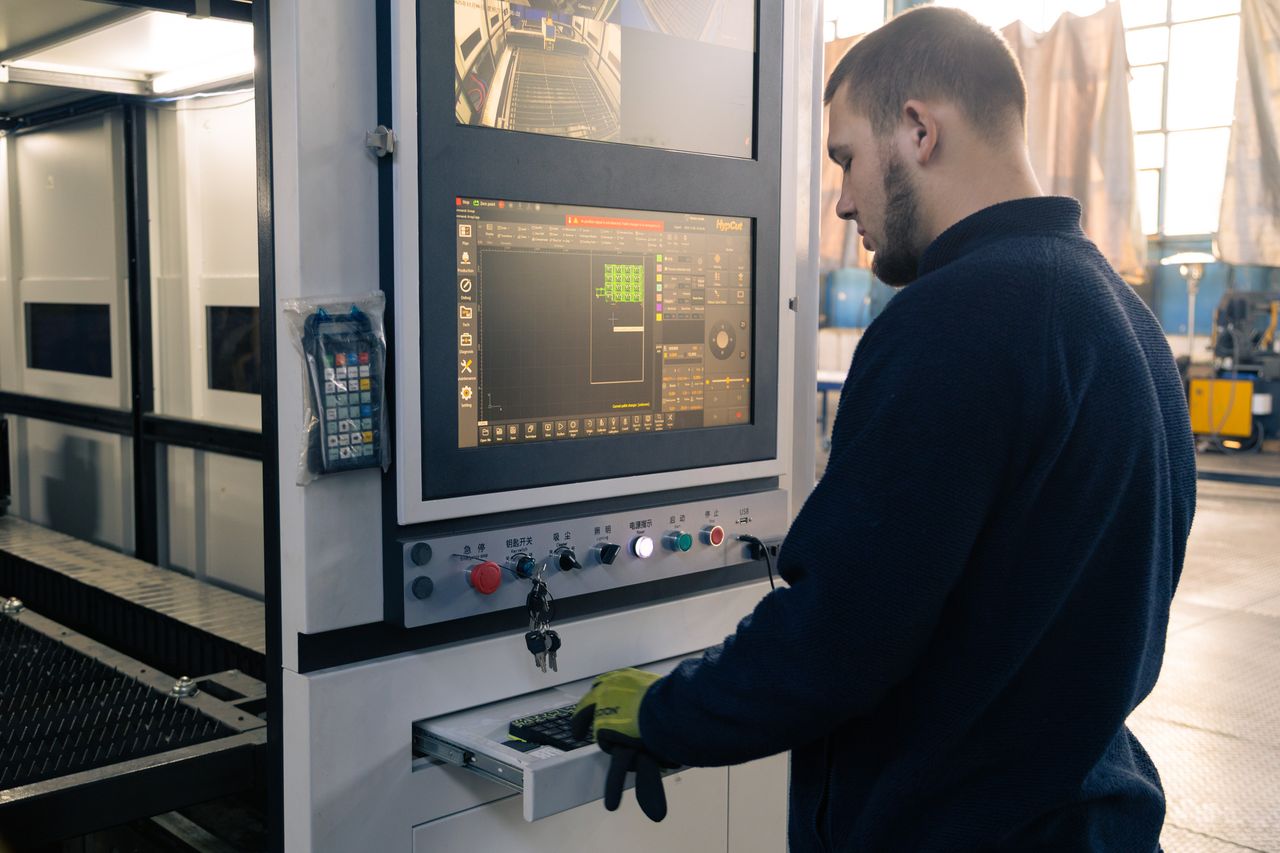
The strongest impulse was the degree to which the individual processes are integrated. Manufacturing looks less and less at the individual machine and more and more at the whole flow of data and material — from the order, through planning, to production, inspection and dispatch. That view matters a great deal to us in the further development of LASERCUT too. So from China we brought back not only contacts and technical ideas, but above all new reference points for how we can digitise our own production further and reduce the number of manual interventions across the whole process. We don’t want simply to copy everything we saw. Our aim is to pick the principles that make sense for our products and for the European manufacturing environment, and adapt them to our own model.
Your strategy counts on expanding production capacity, further digitalisation and then international expansion. How will you choose priority foreign markets, and what do you consider the biggest challenge in exporting your own technology?
We don’t want to choose a market on its size alone. What matters to us is a combination of factors: the number of potential customers, their capacity to invest, the availability of local partners, logistics, service options, legislation and, above all, whether customers in that market are already actively looking for automation. For HORSESTABLE we are naturally interested in countries with strong equine infrastructure, professional stables and a developed equestrian sector. For LASERCUT the choice of market is different, because it is a digital manufacturing platform and its potential is much wider across industrial sectors.
In my view, though, the biggest challenge in exporting a technology product is not the sale itself. It is the ability to support the customer over the long term. If you sell a machine into another country, you have to be able to provide installation, documentation, spare parts, diagnostics and service. That is why we want to build international expansion step by step and together with local partners. For us, export does not just mean ‘selling abroad’. It means building a system in which we can give a customer the same level of support in Bratislava, in Normandy or on any other European market.
What do you think decides whether a Slovak technology and manufacturing firm can move from a good product of its own to lasting success on international markets?
A good product is only the beginning. A company can have very good technology, but if it cannot build the product repeatedly, deliver on time, service it and finance its growth, its potential on an international market stalls very quickly. In my view it comes down to a combination of three things. The first is standardisation. The product has to be flexible enough for different markets, but it must not become a new project with every order. The second is control over the key know-how. A company has to know what its real technological advantage is, and it has to protect and develop that part. The third is local presence and partnership. When you export physical technology, a website in English is not enough. You need partners, service, trust and an understanding of the particular market.
Slovak firms, in my view, have very good technical know-how. The challenge more often is turning that know-how into a brand, a product and a business model that make sense outside the home market as well. That is one of EHOSS’s main goals today. We don’t want to be a company that only makes technically good solutions in Slovakia. We want to build products that are made in Slovakia but designed for the international market from the start. So for us, export doesn’t start at the border. It starts at the first design of the product.